-
plot of 1984
George Orwell’s 1984 is a dystopian novel that presents a chilling portrayal of a totalitarian regime’s control over every aspect of human life. Published in 1949, the book remains a powerful critique of authoritarianism, surveillance, and the manipulation of truth. The story is set in Airstrip One (formerly Great Britain), a province of the superstate Oceania. The world is divided into three such states—Oceania, Eastasia, and Eurasia—perpetually at war with each other. Oceania is ruled by the Party, led by the omnipresent and possibly fictitious Big Brother. The Party maintains power through constant surveillance, censorship, propaganda, and brutal repression. The novel follows Winston Smith, a low-ranking member of the Outer…
-
the symbolism of the “Neolanguage”
George Orwell’s use of neolanguage, famously known as Newspeak in his novel 1984, serves as a powerful symbolic tool that reflects his critique of authoritarian regimes and their manipulation of truth. Beyond a mere fictional linguistic invention, neolanguage embodies the control mechanisms of oppressive governments and warns against the erosion of free thought and individuality. Neolanguage, or Newspeak, is a deliberately engineered language designed to restrict the range of thought. Orwell conceived it as a central feature of the totalitarian state in 1984, where the Party controls every aspect of life. Newspeak’s vocabulary is reduced, grammar simplified, and meanings systematically altered to make subversive ideas impossible to express. In essence,…
-
his thoughts
George Orwell was not a philosopher in the traditional academic sense—he never set out to develop a formal system of thought or write treatises on ethics or politics. Yet his work reveals a powerful and coherent philosophy grounded in moral clarity, skepticism of authority, and a profound respect for human dignity. Through novels, essays, and personal reflections, Orwell articulated a worldview shaped by experience, committed to truth, and constantly engaged in the defense of individual freedom against the forces of oppression. At the heart of Orwell’s thought lies a belief in the importance of objective truth. He saw truth not as an abstract ideal, but as a practical necessity for…
-
his relevance in history
George Orwell remains one of the most influential literary figures of the 20th century, and his relevance has only grown in the decades since his death in 1950. More than just a novelist or journalist, Orwell was a prophetic voice who diagnosed the dangers of totalitarianism, ideological conformity, and the erosion of truth with a clarity that continues to resonate in the modern world. Orwell’s historical importance lies not merely in the popularity of his most famous works, 1984 and Animal Farm, but in the way he captured the moral and political tensions of his time—and anticipated those of the future. Living through the rise of fascism, the horrors of…
-
his works
George Orwell was a British writer, journalist, and critic whose works have had a profound and lasting impact on political thought, literature, and social commentary. Best known for his novels 1984 and Animal Farm, Orwell’s oeuvre spans fiction, nonfiction, and journalism, unified by his unwavering commitment to truth and a deep suspicion of authoritarianism. 1. 1984 1984 is arguably Orwell’s most influential and widely read work. This dystopian novel presents a terrifying vision of a totalitarian regime led by the omnipresent Big Brother, where truth is manipulated, language is weaponized, and individual thought is criminalized. The protagonist, Winston Smith, struggles to retain his identity and autonomy in a world dominated…
-
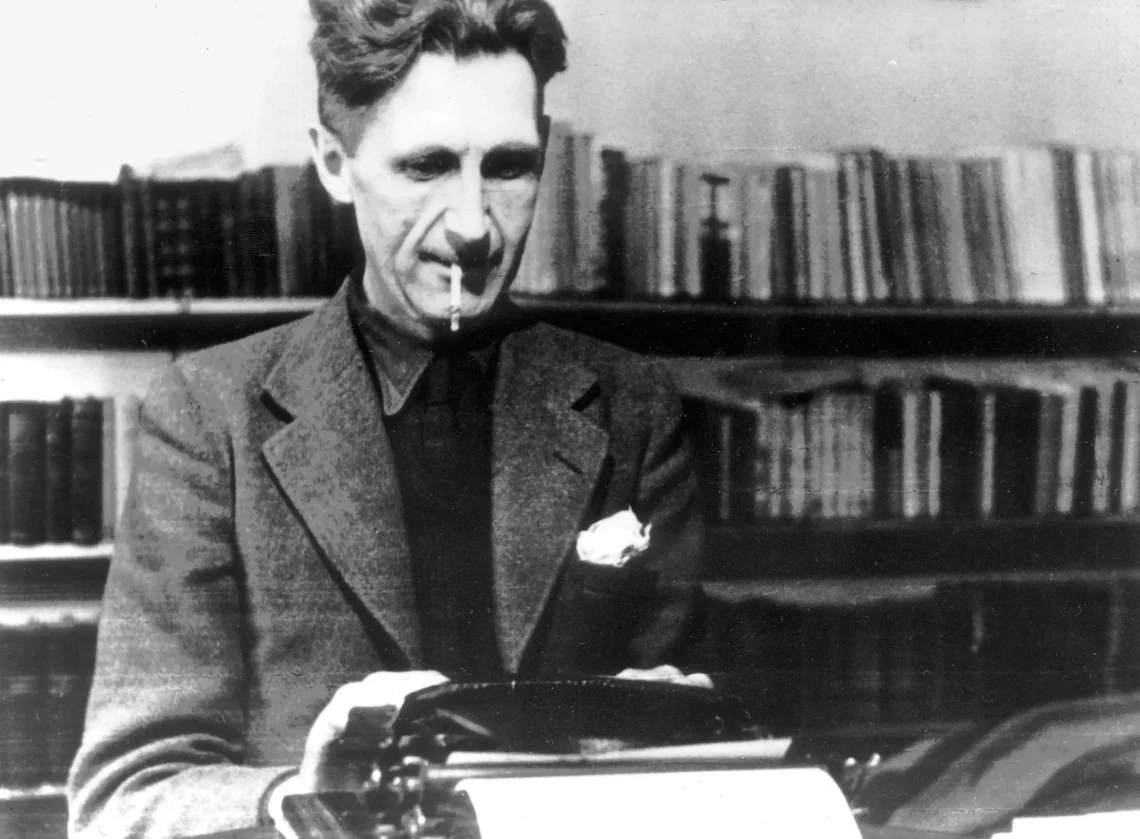
Orwell’s biography
Orwell was born in Motihari, Bihar, India, on June 25, 1903, to a family of Scottish origins, belonging to the lower-middle class. His father of Anglo-Indian origins was an official of the British administration in India, where the family managed to reconcile the actual scarcity of means with the preservation of appearances. In 1904, Orwell moved to the United Kingdom with his mother and sister, where he enrolled at St. Cyprian’s College in Eastbourne.He left the college with a scholarship and a strong inferiority complex, due to the humiliations and snobbery suffered over the years by his fellow students, towards the entire society of the United Kingdom of his time.…